

Dining & Humanities
The Dining Hall Redefined: Architecture for Experience Via Natural Materials
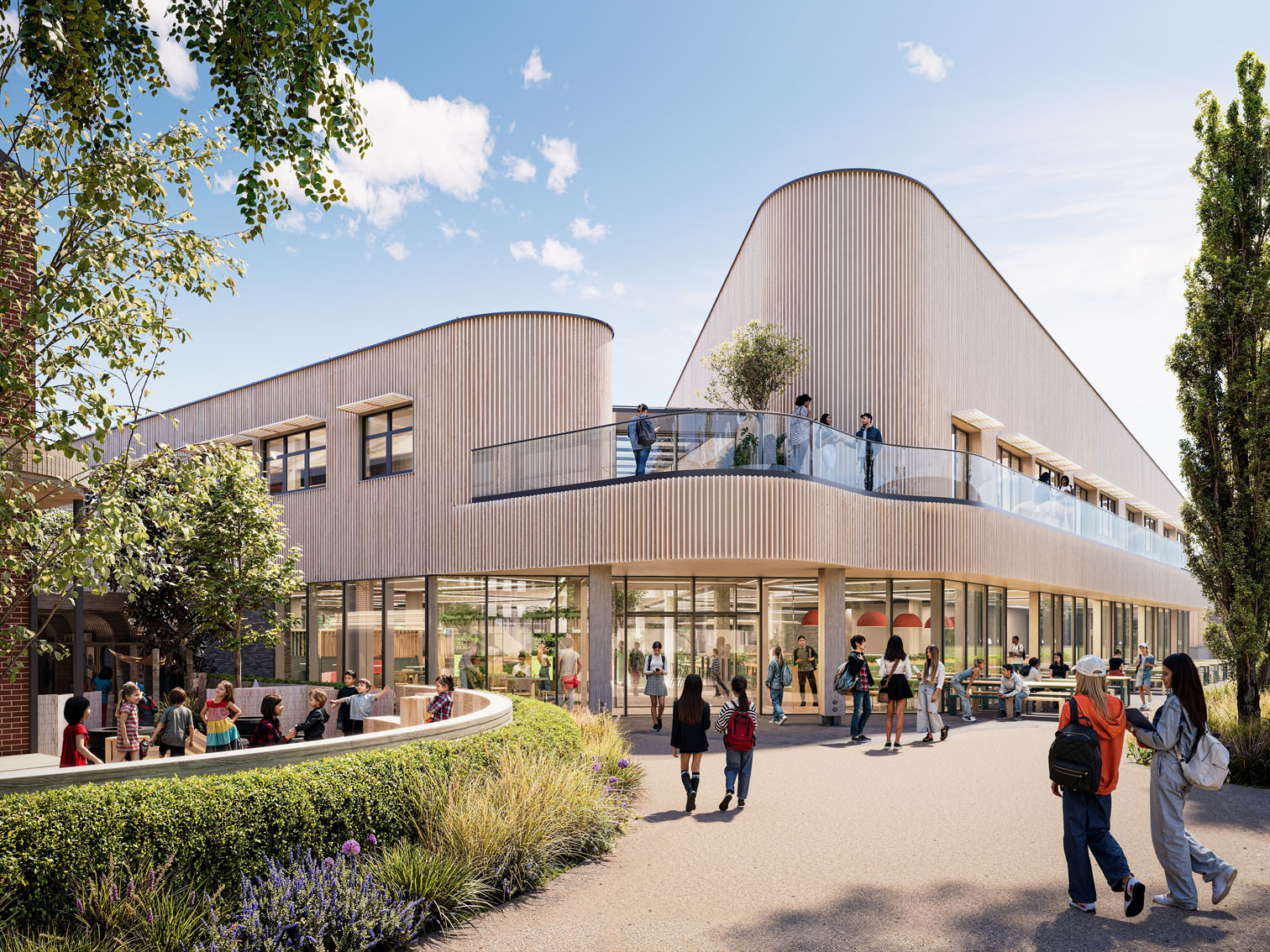
Client: The British School of Brussels (BSB)
Location: Tervuren, Brussels, Belgium
Context: Part of Phase 1 of BSB’s long-term campus masterplan
Project type: New-build Dining & Humanities facility (approx. 3,000m²)
Status: Concept and schematic design complete; Phase 1 of masterplan approved for construction.
Our role: Concept and schematic architecture, interior and landscape design, design guardianship to completion
Collaborators: Group IPS (Executive Architecture, QS & PM), Kampus, & Specialist acoustic, sustainability and engineering consultants
Brief
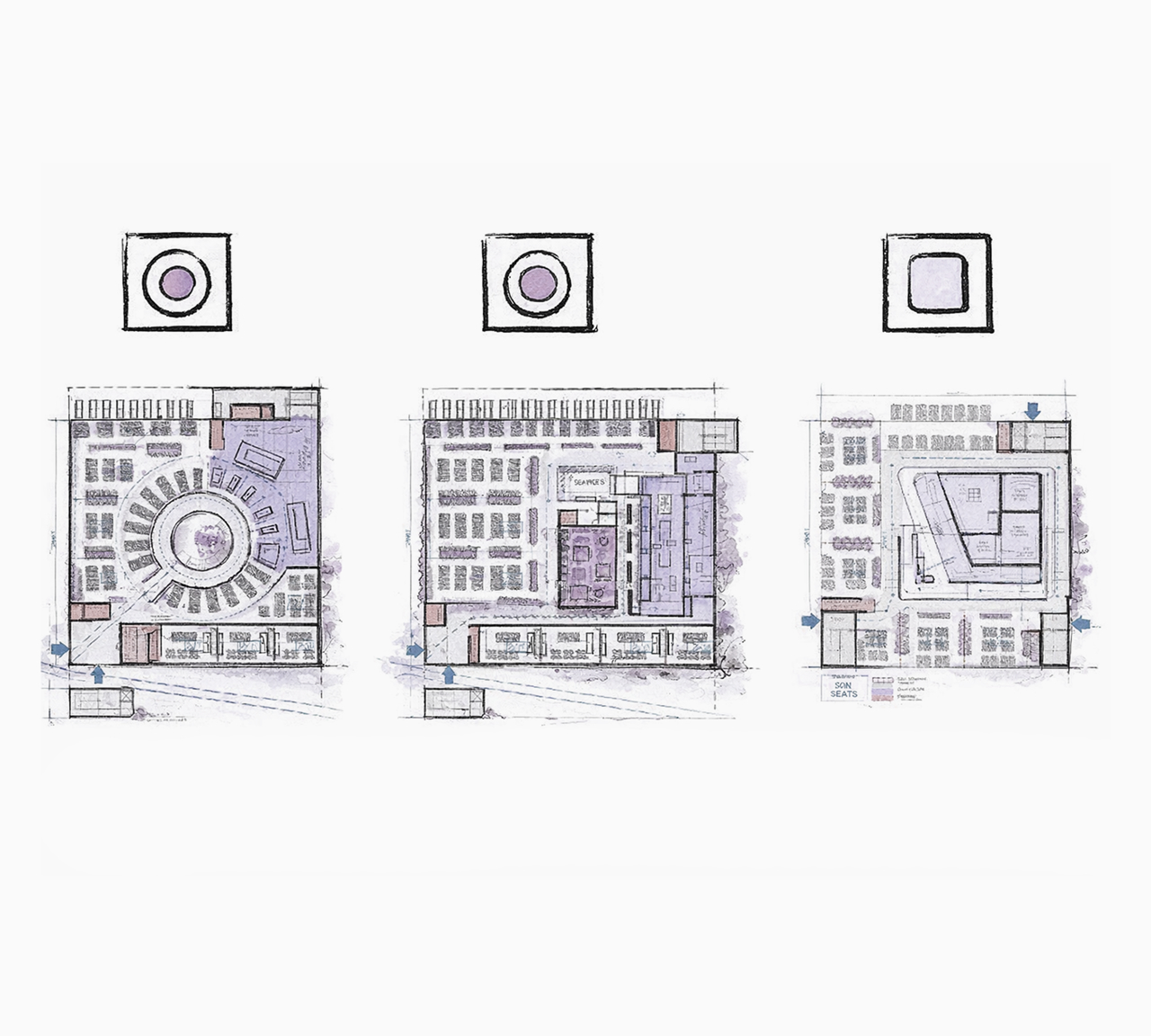
BSB sought to transform an undersized, outdated dining hall into a space that truly embodied its values: nurturing confident, caring, courageous and curious learners. The school wanted a dining experience that is healthy, joyful and efficient not a “stuffy canteen.” A building capable of serving 1,250 students across sittings within 90 minutes. A humanities department that supports debate, collaboration and creative thinking. A campus intervention that connected teaching innovation with physical space. A low-carbon, future-focused building aligned with BREEAM ambitions and BSB’s sustainability ethos.
Analysis | What we found
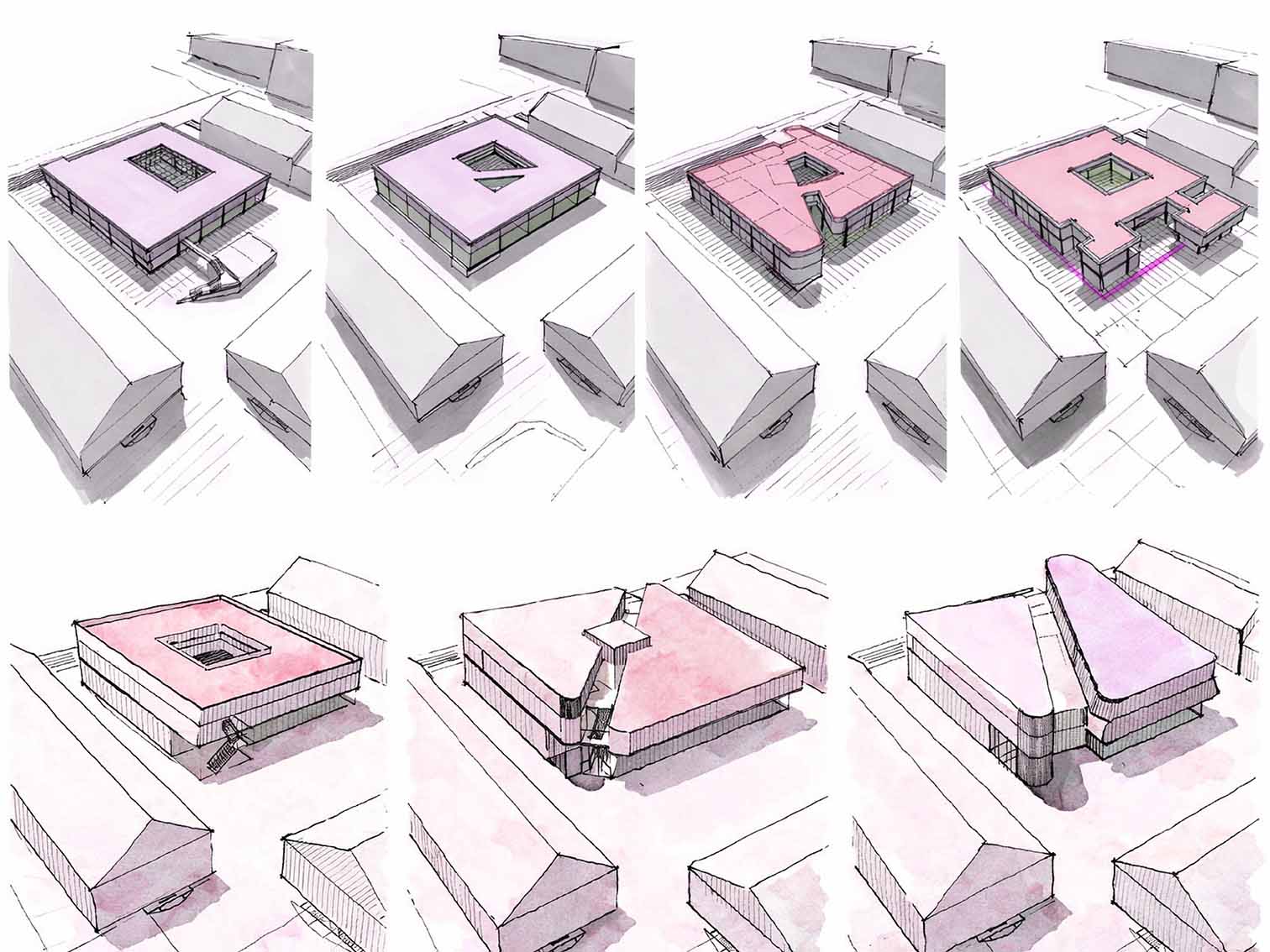
Through workshops with leadership, staff, students and parents, several themes emerged. The dining experience was operationally constrained and emotionally flat. Queuing extended outdoors in poor weather. Spaces felt disconnected from the school’s character and woodland setting. Classrooms were conventional and limited in flexibility. The wider campus lacked a unifying landscape strategy. At the same time, BSB’s educational strategy was progressive and values-driven. The opportunity was clear: translate ethos into experience. Working alongside other members of the Kampus, we helped develop an experience strategy from which we then designed the building based on user journeys and experience touch points along them.
In parallel with iterative development of the building mass, we undertook a detailed climate analysis and then focused on the strategies to deliver a Passivhaus standard building envelope that also delivered a delightful experience. We also undertook a detailed look at the construction systems that would align with the Kampus experience strategy. As such a natural materials solution was developed.
Proposition | Placing Nature at the Heart
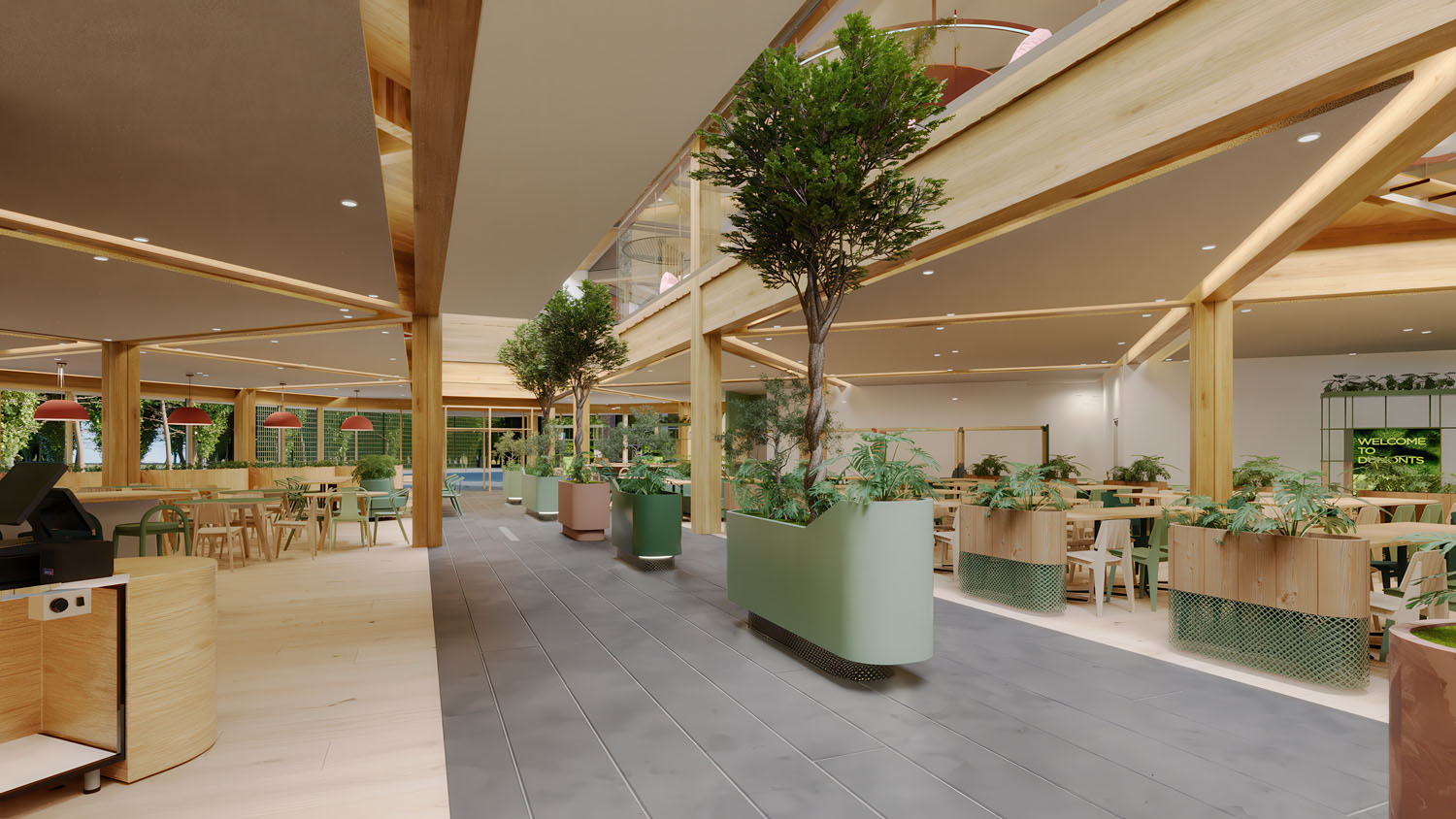
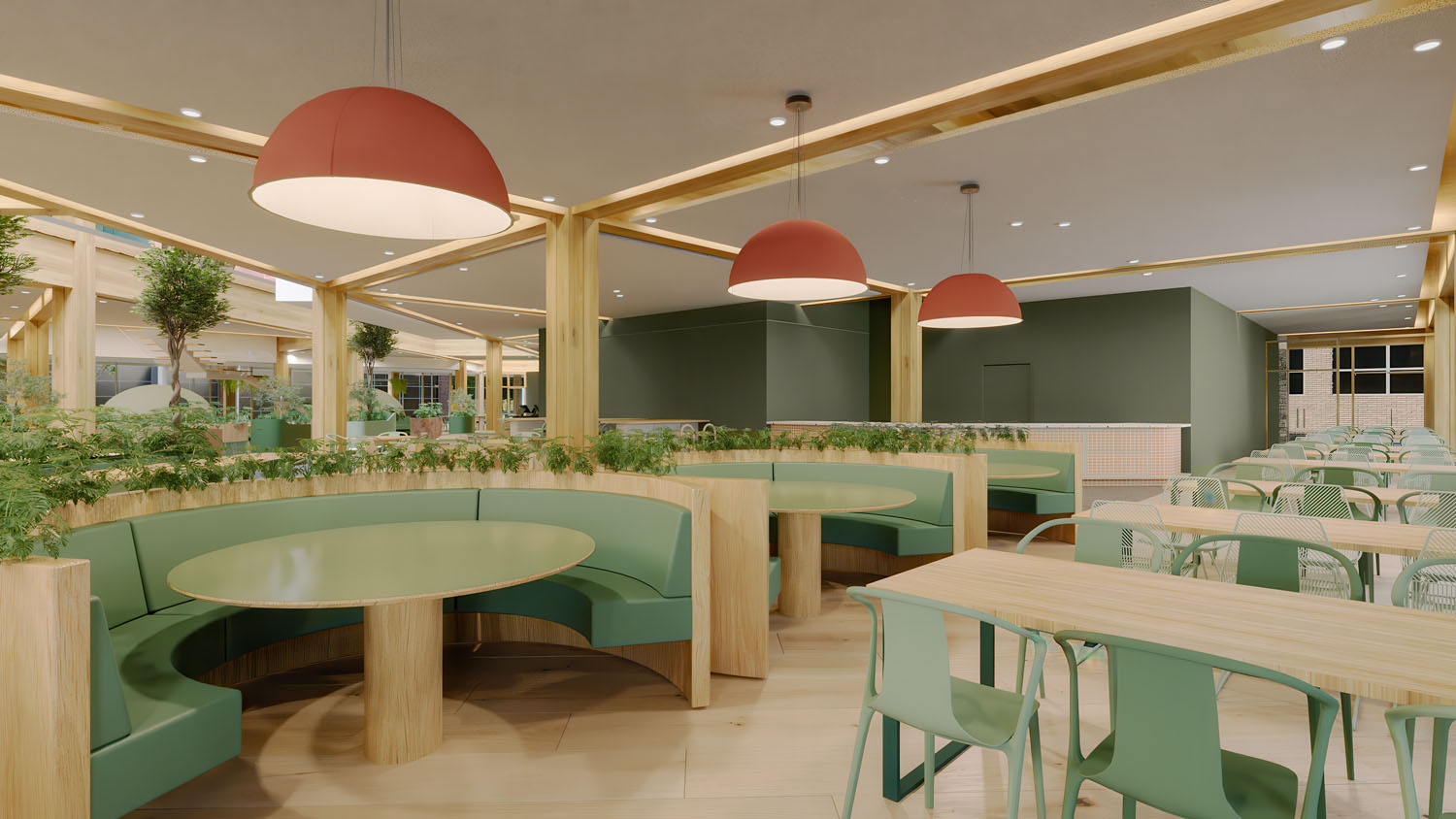
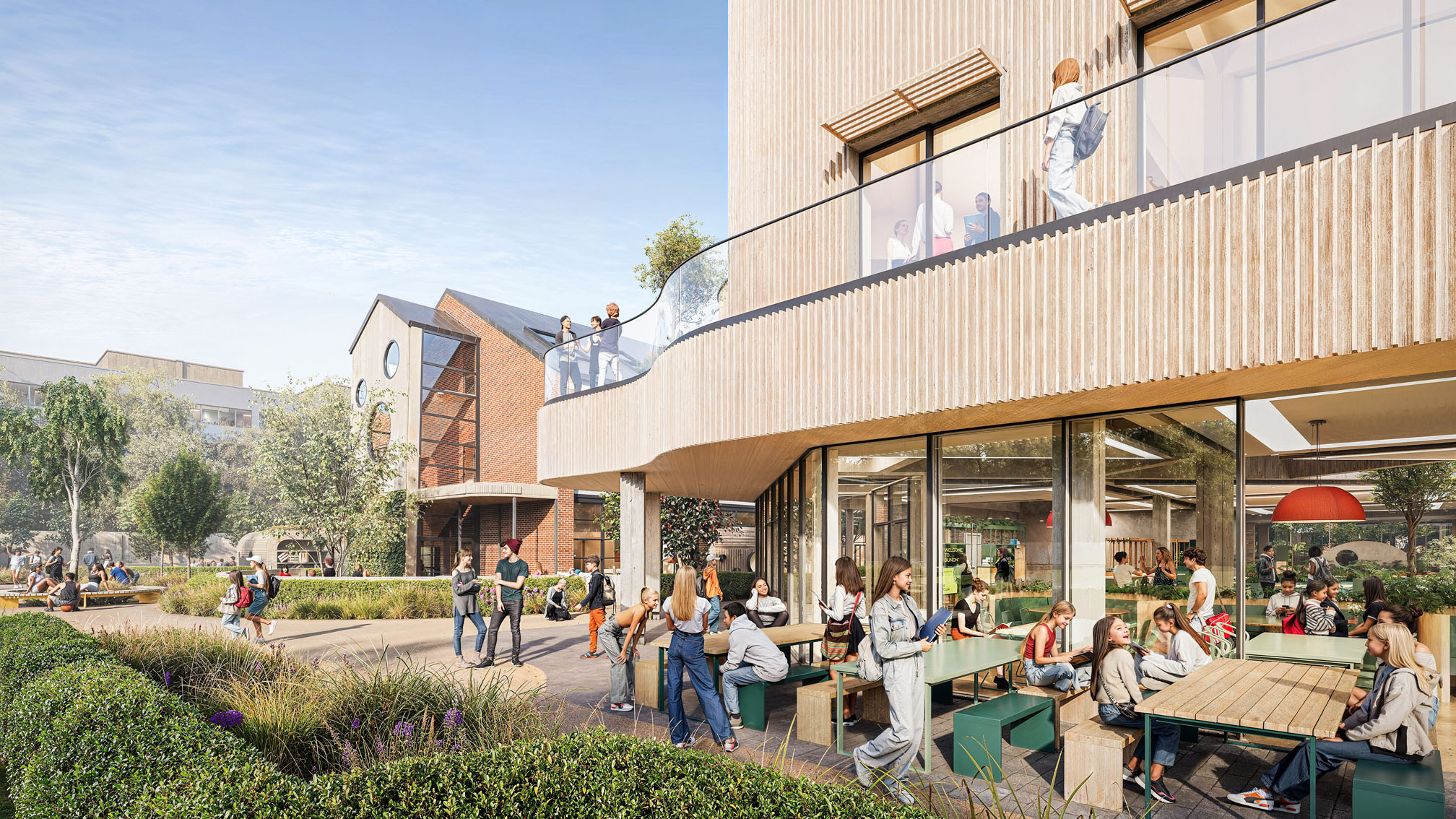
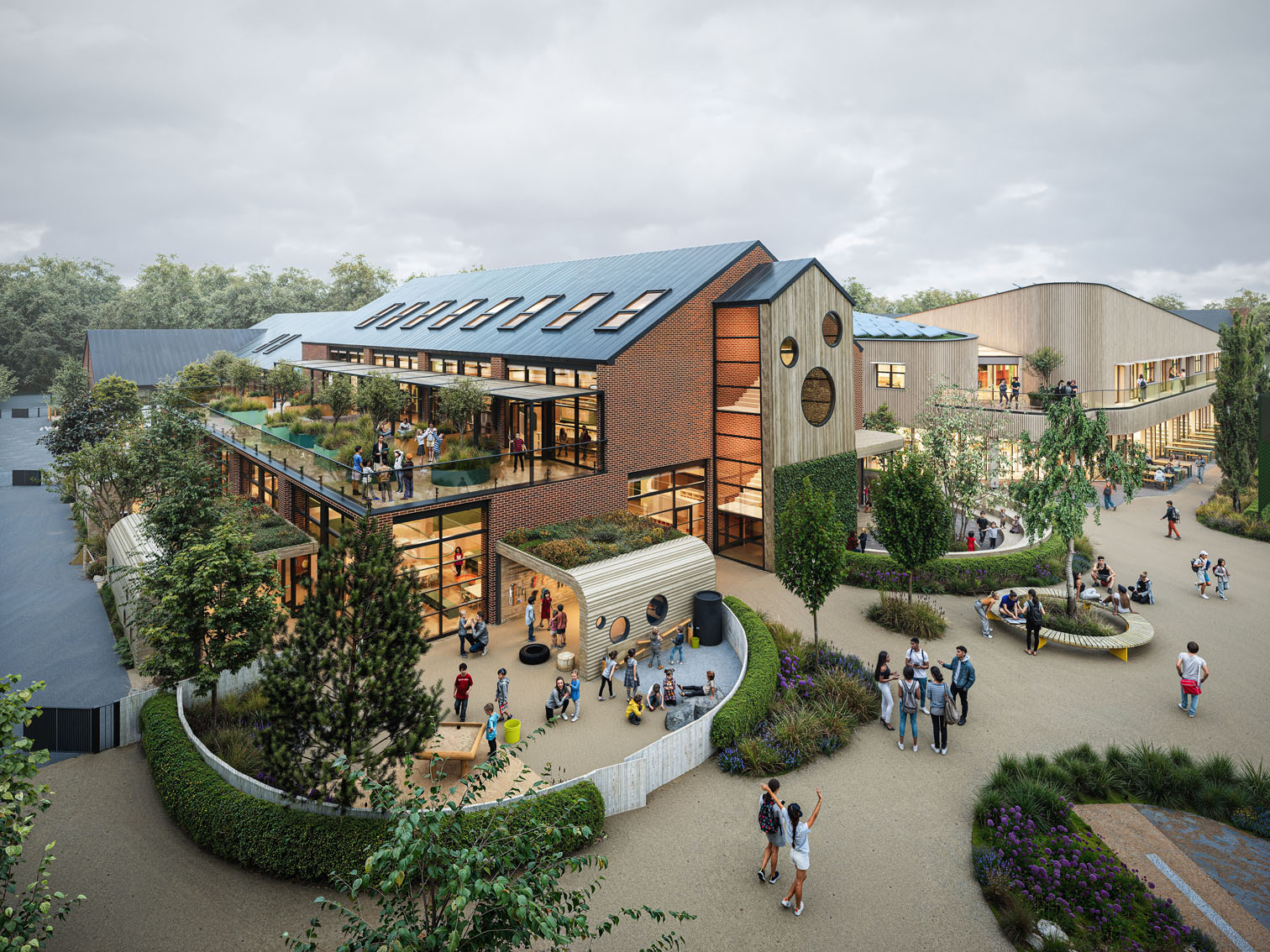
We designed the building as a social learning commons, not a canteen, not a corridor block, but a landscape for belonging. A diagonal atrium cuts through the plan, bringing daylight deep into the building and linking visually to the “green heart” of the masterplan. Dining feels like eating in a forest clearing timber structure, planted interiors, green roofs and framed woodland views.
Proposition | Designing the Dining Journey & a Learning Topography
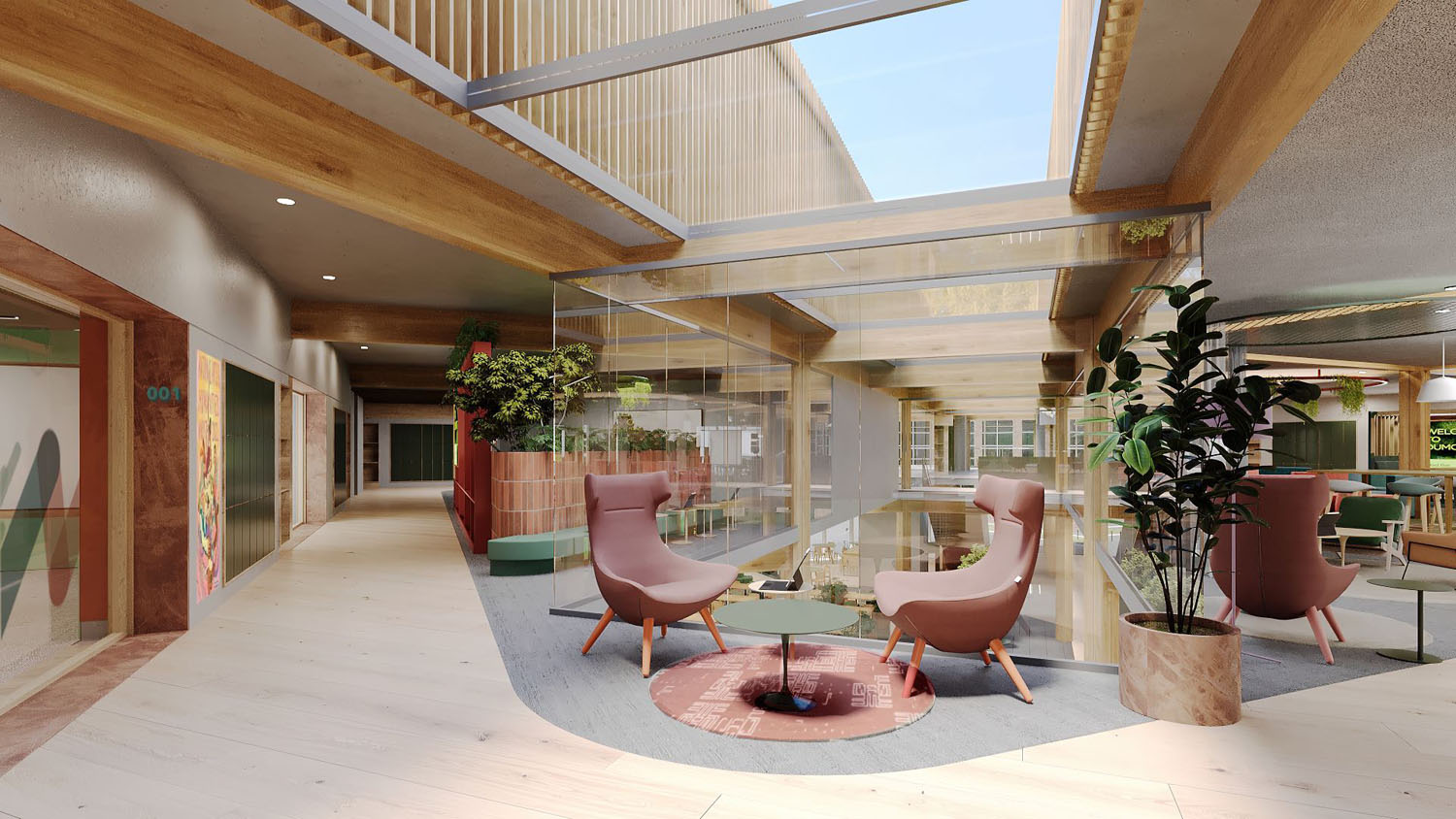
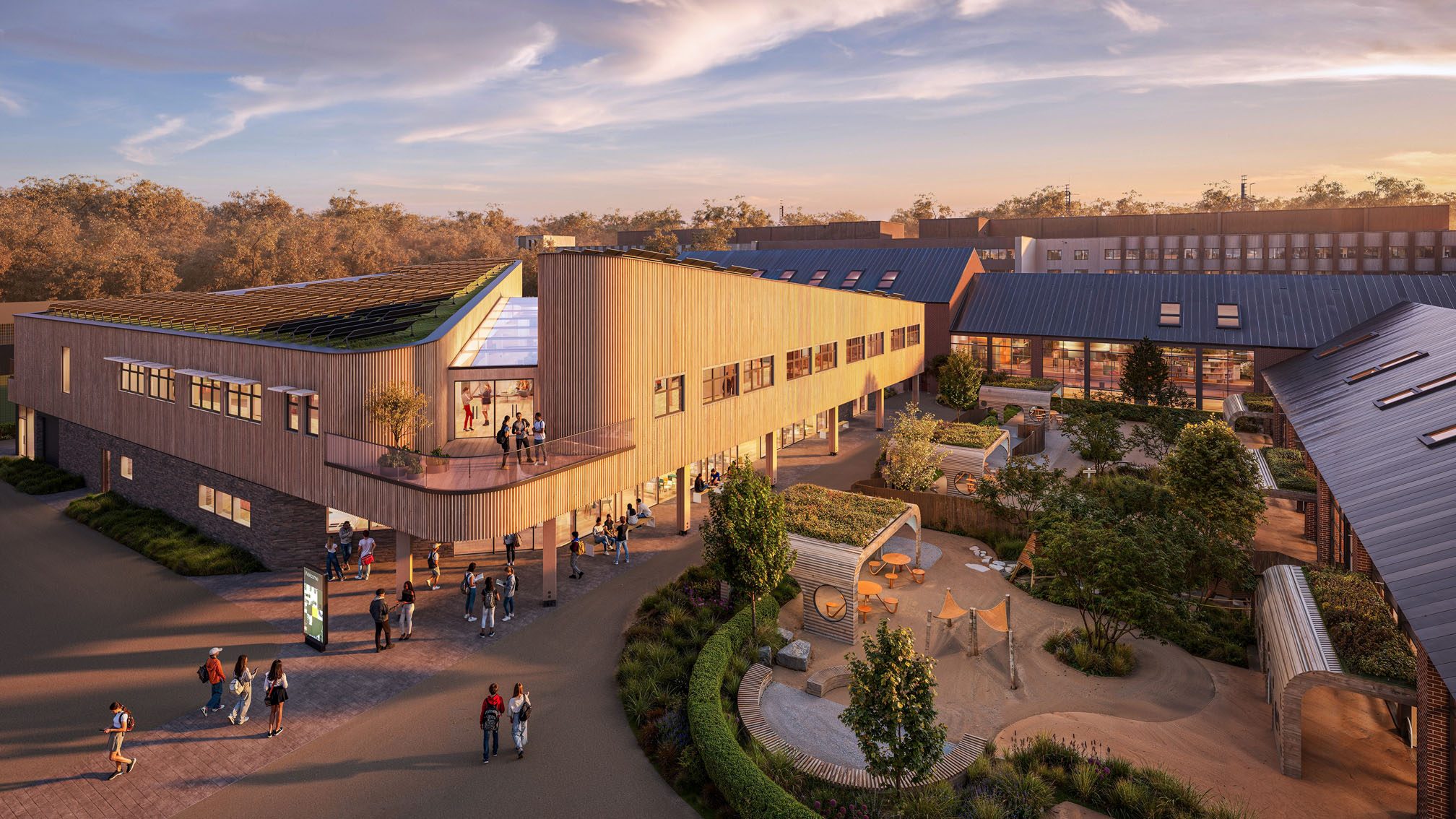
We carefully mapped the student journey, creating a generous covered arrival that leads to engaging displays, and educational moments in the queue. Varied seating, long tables, café zones, banquettes and quiet corners, support collaboration beyond lunchtime. Above, fourteen enlarged humanities classrooms sit around a central learning commons. Debate chambers and breakout niches create a layered learning landscape.
Proposition | A Values-Based Interior Language and Borderless Buildings
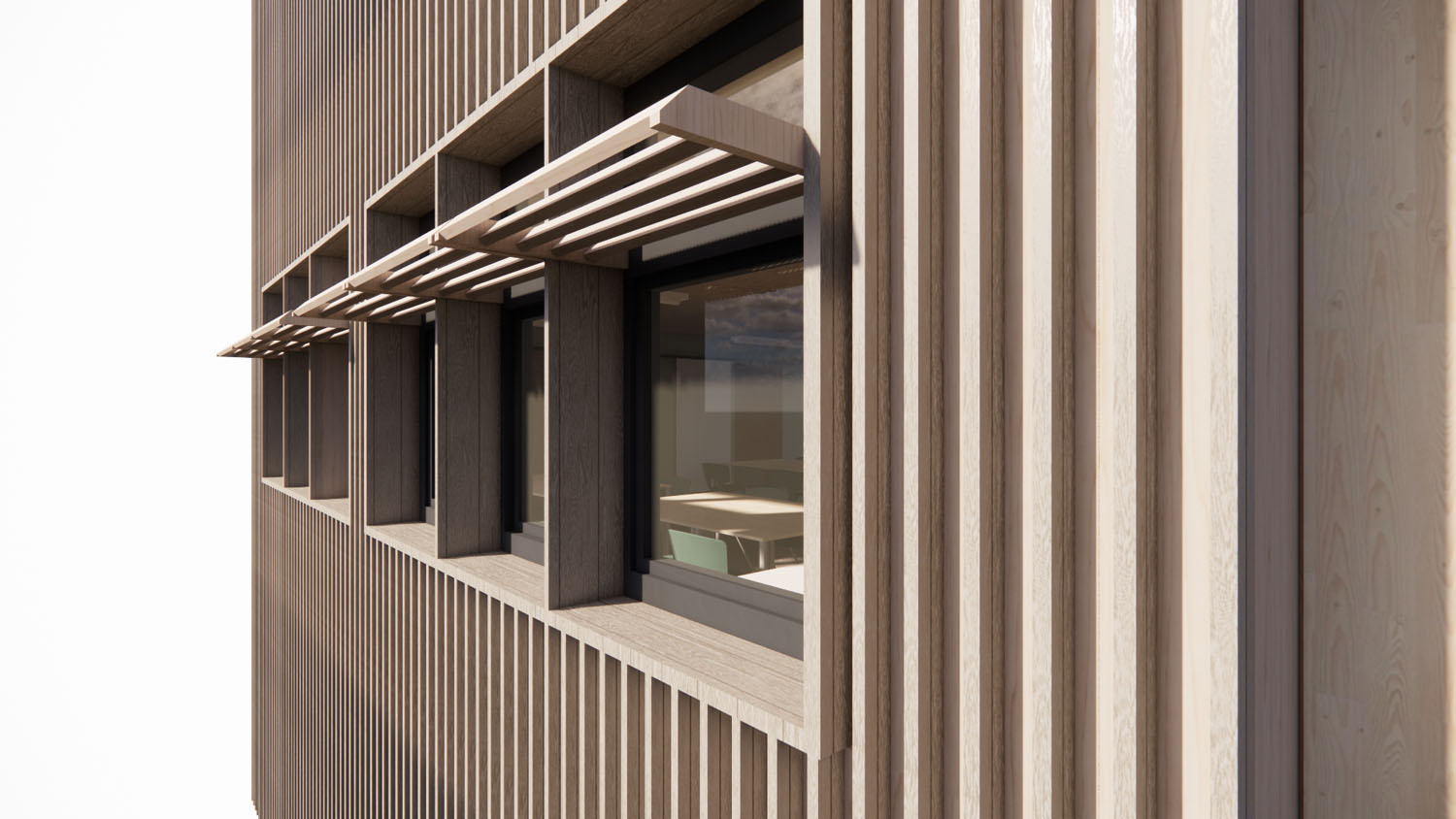
Generous ground-floor glazing dissolves the boundary between inside and out, opening onto terraces that overlook the sports pitches and wild garden. Covered external areas shelter students from rain and wind, extending use throughout the year. A palette of timber, earth tones, terracotta and glass reflects BSB’s character, while acoustic ceiling rafts, balanced lighting and curated display bands create calm, comfortable classrooms free from visual clutter.
Proposition | Sustainability by Design
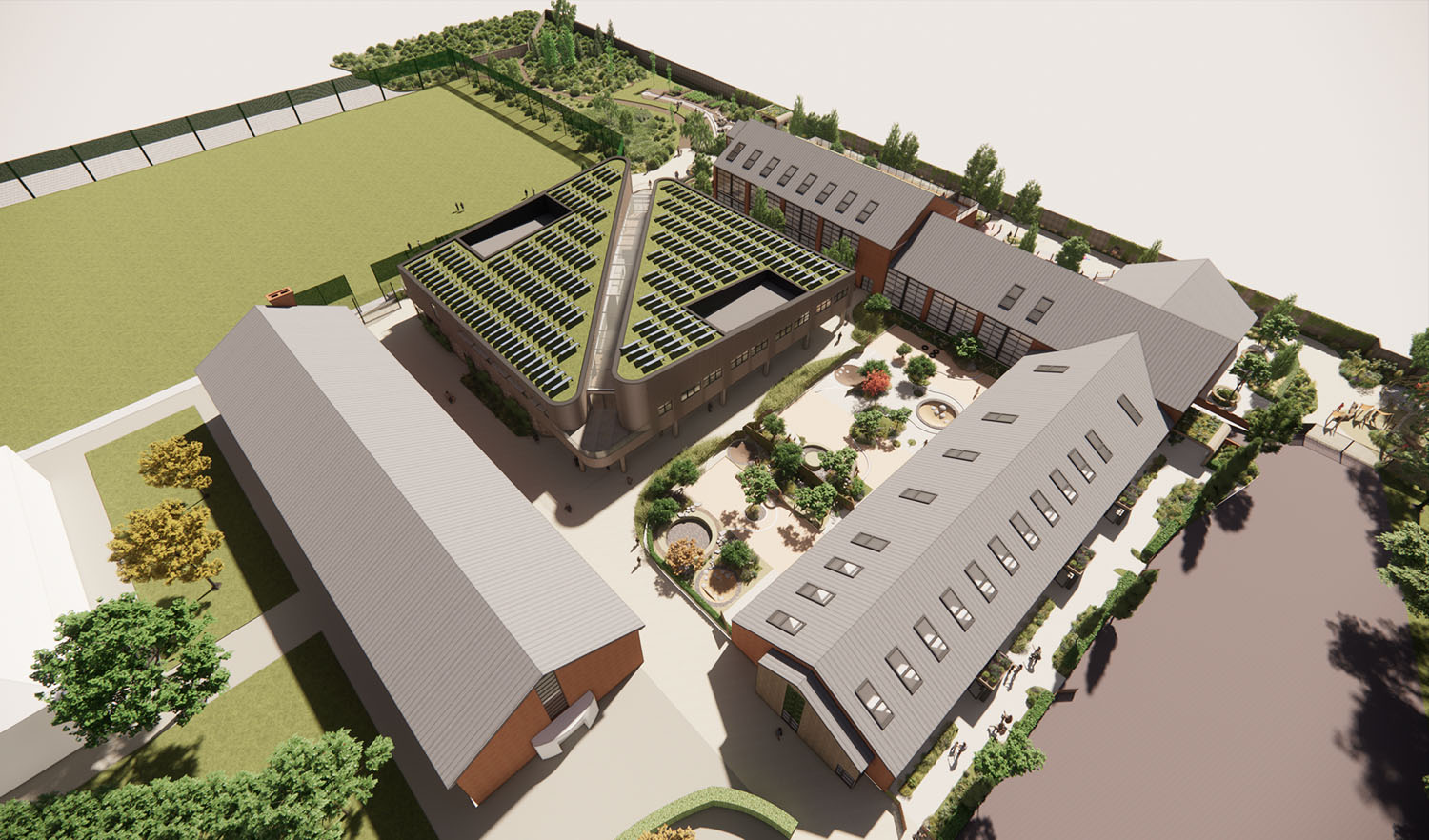
Environmental thinking shaped the project from the outset. A timber superstructure within a highly insulated envelope combined with geothermal heating manages thermal performance. Green roofs integrate photovoltaics. Passivehaus principles were balanced with BREEAM wellbeing targets, delivering a low-energy building with equal daylight to every classroom, ensuring comfort, performance, and no hierarchy of experience.
Outcomes so far
Planning approval secured for Phase 1 of the masterplan, and it is moving to construction.
A fully resolved concept balancing sustainability, wellbeing and operational efficiency.
A flagship example of experience-led education design aligning land, brand and belonging.
Conclusion | Why it matters
The Dining & Humanities Building reflects what we have learned as a practice: powerful educational architecture begins with experience. True differentiation comes not from spectacle, but from how a place supports daily life. At BSB, we mapped movement, gathering and learning, allowing activity to shape form. Sustainability followed the same principle, embedded in orientation, daylight, ventilation and material choice. Timber structure, passive design, calibrated glazing and biodiverse landscapes respond directly to context and climate. Natural materials add warmth and longevity. When experience and environmental intelligence align, architecture becomes culture made visible.
Reflections
The building forms part of a living masterplan conceived as a portfolio rather than a fixed blueprint, this is something we will develop in abstract of the project as well as on it. We will apply what we have learnt. Strengthening borderless learning, enhancing biodiversity and low-carbon performance, and deepening the relationship between student agency and spatial design. Architecture is not backdrop, it’s the mediator between internal and external experiences.
Our Manifesto
Our ambition is to devise and nurture solutions to global problems and make sustainable places for everyone.